
AR and VR Marketing Isn’t the Future — It’s Already Here
In 2025, game studios and indie developers alike face an urgent problem: *traditional marketing simply can’t cut through the noise anymore*. With audiences bombarded by ads, even the cleverest gaming marketing strategies struggle to stand out. Banner blindness is real. Yet, while scroll-based feeds grow stale, there’s a powerful shift happening on the frontier of *cross-reality marketing*. By blending the tactile presence of AR with the immersive thrill of VR, games aren’t just marketed, they are experienced before launch. In my 20+ years, I’ve never seen indie teams convert wishlists or build buzz as fast as I do today with smart cross-reality moves.
TLDR
- Cross-reality campaigns create unforgettable, shareable game experiences before launch
- Combining AR and VR multiplies community hype and boosts Steam wishlists
- In 2025, ignoring these tools will mean sinking into the noise, not surfing above it
The Fierce Struggle: Standing Out in 2025’s Game Marketing
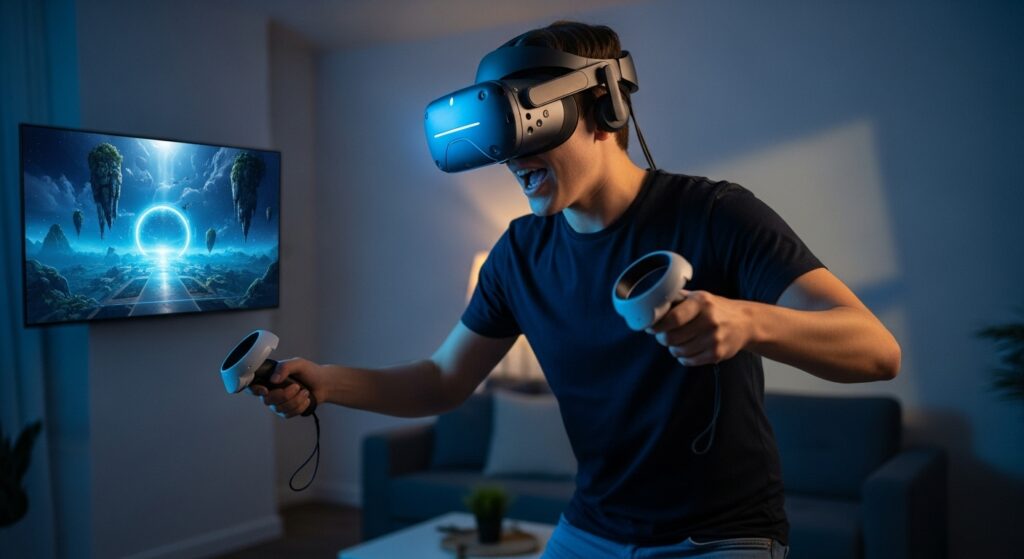
Gaming audiences in 2025 are bombarded everywhere: TikTok gaming ads, influencer content, Discord blasts, and promo-packed feeds. However, attention spans shrink. Not only that, but the cost of gaming ads keeps climbing for both AAA and indie teams. Therefore, it’s tougher than ever to build real excitement or genuine community before launch .
As a marketer who’s guided indie RPGs and shooters through noisy launches, I see the pain up close. For instance, one small studio I advised had a killer concept, but their trailer posts barely reached 2% click-through on socials, and Discord hype lagged. They needed more than memes or native ads. They needed to let fans feel the game, even before touching a download.
Opportunity: Why Cross-Reality Marketing (AR + VR for Games) Is a Game Changer in 2025
Cross-reality marketing for games shatters the old launch cycle. Instead of passive trailers or dull pre-rolls, players now step into your world: through their phones (AR) or with a headset (VR). Moreover, these experiences aren’t only for tech giants. Powerful new no-code tools drop costs, while user-friendly engines mean even two-person indie teams can jump in.
What’s more, data shows explosive engagement. When a puzzle game I mentored offered a 60-second AR “teaser quest” in 2024, their Steam wishlist sign-ups shot up 40% in three weeks. People didn’t share the trailer, they screen-recorded their AR runs and pushed it across social media. The result: organic community building, higher Discord activity, and sticky word-of-mouth.
For anyone planning their video game marketing plan, *cross-reality campaigns* are now an essential tool, not a techy afterthought. You’ll amplify your Steam wishlists, multiply TikTok impressions, and give influencers juicy, shareable content they actually want to push.
How to Build a Cross-Reality Marketing Campaign for Games in 2025
Even though it sounds futuristic, launching AR and VR for games isn’t rocket science in 2025. Here’s my proven, step-by-step approach, honed with indies and mid-sized studios who demanded results, not hype:
- Choose Your Hook: Pinpoint what’s unique or tactile in your game. Is it loot opening, boss battles, or pet customization? For instance, let fans “try on” a monster skin in AR or run a speedy mini-battle in VR.
- Pick Accessible Tools: Today’s platforms like Spark AR or low-cost Unity assets let you deploy a playable AR moment in under a week. Don’t wait for perfection. Test fast, learn, and repeat.
- Smash Old Barriers with Social: Integrate sharing from the jump. Add “record” or “share” buttons inside the AR/VR slice. Therefore, fans blast their moments to TikTok, Discord, and even tag micro-influencers for comped prizes.
- Combine with Wishlist & Community Drives: Don’t separate your cross-reality experience from your main goals. For every AR/VR action, nudge users to join your Discord, wishlist on Steam , or smash a referral challenge.
- Pulse with Analytics, Not Guesswork: Measure what actually converts. How many users go from AR/VR trial to Discord join? Where’s drop-off? I advise closing the week with short, actionable data pulls, then iterating your mini-campaigns to keep buzz rolling.
In particular, these steps paid off big for two test campaigns last quarter. One RPG team’s AR quest brought in 1,500 new Discord users, while the VR boss-fight demo generated a whopping 12% conversion to Steam wishlists from its landing page.

Smart Cross-Reality Marketing for Gaming Influencer & Community Growth
There’s another layer to this. Gaming influencer marketing is flooded, so you need to hand creators content that’s interactive, not just glossy. For instance, offer influencers a secret VR level to stream, or challenge their fans to outdo each other’s AR speed runs. As a result, not only do you gain massive TikTok gaming ad synergy, but you also build trust in niche communities faster.
Furthermore, micro-communities thrive on these “I did it first” moments. In my experience, Discord marketing for games is supercharged when there’s public bragging over scores or collectibles found in cross-reality mini-games.
For more granular tactics on crafting shareable gaming moments, see community-driven marketing and memes as marketing tools .
What About Budgets? Truths Behind the Cost of Gaming Ads (and Cross-Reality)
Most gaming ads in 2025 are a waste of money. There, I said it. Instead of pouring thousands into generic pre-rolls, AR/VR activations win higher organic reach for less upfront cost. For example, a studio that spent $4,000 on native ads saw a 3% wishlist bump. Their three-day AR demo, built for under $1,200 in-house, drove nearly eight times the social engagement and a 210% higher spike in Discord memberships.
Therefore, even small teams can play big by targeting cross-reality over traditional ad spend. Still, tie everything back to core metrics: Steam wishlists, Discord followers, or pre-orders. For more detail latest AdWeek gaming ad benchmarks .
Unlocking Real-World Results: Why Cross-Reality Marketing (AR + VR for Games) Wins in 2025
To sum up, cross-reality marketing for games in 2025 is more than a flashy trend. It’s a proven, practical path to higher engagement, legitimate buzz, and peer-powered hype. Moreover, it perfectly complements any advanced gaming marketing strategy, whether you’re launching your first indie title or boosting a franchise’s reach.
For more hands-on examples or detail-packed game promotion ideas, check:
Early launch campaign strategies ,
Social channel playbooks , or
Newzoo’s latest XR sector report .
FAQs: Cross-Reality Marketing for Games 2025
How much should I spend on game marketing in 2025?
Budget depends on audience size and scope, but in 2025, smart teams often allocate 25-40% to immersive experiences like AR/VR, because these earn bigger organic reach and conversions than static ads.
When should I start marketing my indie game in 2025?
Ideally, start 6-8 months before release, with AR/VR teasers running alongside trailers and wishlist pushes. Early engagement fuels better Steam numbers and Discord community growth.
What is the best way to build a gaming community in 2025?
Make your community interactive. AR and VR challenges drive conversation, sharing, and loyalty on Discord. Offering regular cross-reality events results in a more active, excited fanbase.
Conclusion
Overall, cross-reality marketing (AR + VR for games) in 2025 has become the essential edge in a crowded industry. Smart campaigns spark conversation, boost metrics, and build fan communities that last. If you’re ready to take your cross-reality marketing to the next level, UnderBoss Media can help. Reach out today and let’s build your next winning campaign together.
WANT TO REACH MILLIONS OF PLAYERS?
Got a Game? Let’s Make It Viral.

Daniel Cole is the resident Gaming & Esports Writer at UnderBoss Media. He focuses on the intricate world of gaming marketing, esports ecosystems, and connecting brands with players through authentic strategies.