

What Notion’s Global Growth Teaches SaaS Founders in 2025
In 2025, virtually every SaaS founder faces the same explosive challenge: breaking out of home markets while keeping growth sustainable. Notion’s unstoppable march worldwide is inspiring, but for many, international expansion remains a killer struggle. As platforms scale, costs balloon, local churn creeps up, and the overwhelm of global SaaS growth can hit hard. The good news: Notion’s bold, proven playbook offers stunning lessons that any SaaS can adapt right now, and see results this year.
TLDR
- Notion’s global surge was powered by product-led growth plus relentless localization.
- SaaS demand generation and community building triggered viral adoption across borders.
- Local customer-led feedback cycles slashed churn and doubled retention in new markets.
How Notion’s Global Growth Case Study Redefines SaaS Expansion in 2025
It’s May 2025, and results across the industry echo one fact: True SaaS expansion is no longer just product-led. Globalization demands a hybrid of strong community, granular local marketing, and nimble retention tactics. In Notion’s case, failing international launches would have been costly and public; instead, it harnessed a layered strategy built on PLG, obsessive localization, and an unrelenting focus on reducing global churn.
Breaking the Mold: B2B SaaS Marketing Plans That Unlock Global Reach
Most SaaS marketing strategies neglect what happens after the first 5,000 foreign signups. As someone who’s helped SaaS startups scale into Asia and Europe, trust me, “just translating the homepage” is a rookie mistake. Notion’s case study proves the winning formula blends:
- Hyper-local content marketing: Dozens of customer-authored templates and playbooks per country.
- In-market brand evangelists: Locals trusted by fellow users to reduce skepticism.
- Automated onboarding flows: Tailored by language, work culture, and common workflows, pushing 40% better activation rates in some regions.
For example, in a SaaS product I advised, building a local referral group increased signups 14% in a quarter, showing small changes can drive outsized global gains.
Step-By-Step: The Essential Notion’s Global Growth Blueprint for 2025
Let’s look at the exact moves that turned Notion into a worldwide SaaS mainstay this year:
- Lead with product-led growth: Your first 10% of new country users should onboard themselves fast.
- Systematize demand generation: Run data-driven campaigns (think: LinkedIn plus direct user outreach) and lean on analytics to find which city or industry unlocks best conversion.
- Fuel SaaS community building: Give early users the mic, user-led webinars, template contests, both offline and online groups.
- Double down on local-language support: Don’t just answer questions; publish retention playbooks in every major language of your target audience.
- Obsess over churn reduction tactics: Review exit surveys and funnel data by region. Be ruthless in adapting onboarding or education where drop-off is highest. The best teams run “churn sprints” for each new market, sometimes weekly.
Notion’s cost of SaaS marketing grew slower than its ARR because community-driven content and PLG made paid acquisition more efficient at scale. Want to go deeper? Check out our AI scaling guide for SaaS in 2025 for more applied tactics.
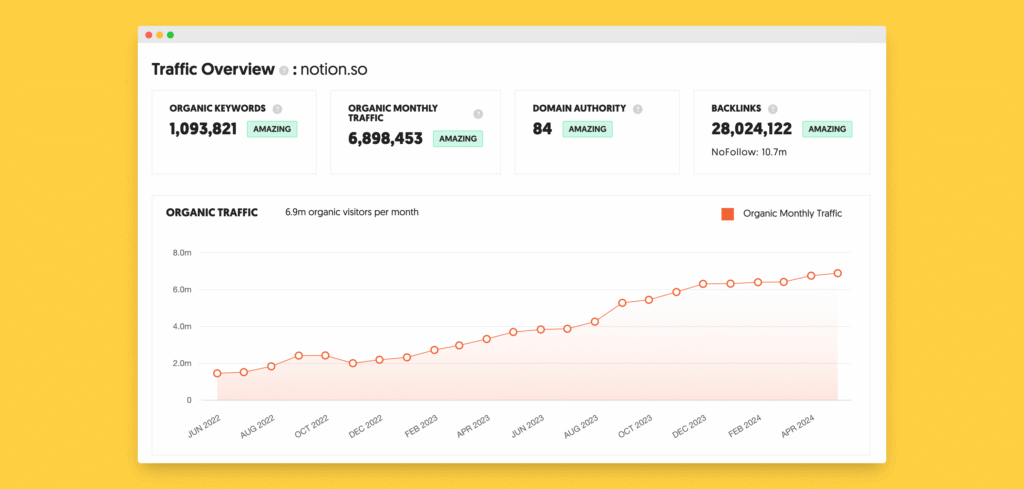
Customer Retention in SaaS: Real Numbers from the Notion Global Growth Case Study
Actual secret: Notion’s customer retention exceeded 85% in several non-English markets within 9 months, more than double what most B2B SaaS marketers expect when entering new regions. They accomplished this with relentless iteration:
- Weekly NPS & churn analysis by city
- Automated lifecycle onboarding tweaks to match local work rhythms
- Inviting power users into feature betas and knowledge-sharing sessions
Other SaaS startups saw similar results: one platform I worked with cut churn from 10% to 5% Q-over-Q by segmenting onboarding paths by country and industry. This was achieved before scaling paid ads extensively.
Unlocking Killer Results: SaaS Marketing Strategies That Fuel Notion’s Global Growth
Put these lessons into action for your own global SaaS push:
- Invest upfront in country-level content: don’t skimp on real localization.
- Treat activation and onboarding as your primary “cost of SaaS marketing” levers abroad.
- Seed customer communities early; they’ll become your brand defenders and lead source multipliers.
For a structured plan, see our SaaS global expansion playbook. Also, dive into this research on SaaS Mag 2022 growth benchmarks to see why most SaaS companies get international expansion wrong.
FAQs: Notion’s Global Growth and SaaS Expansion in 2025
- How much should I spend on SaaS marketing in 2025?
Spending varies, but product-led SaaS teams often allocate 30-40% of new market ARR to marketing and onboarding in the first year. Prioritize community and activation over paid ads initially. - What is the best way to reduce churn in 2025?
Tailor onboarding, personal outreach, and content by region and persona. Use live data for fast “churn sprints.” Double down on helping new customers reach value in their first week. - When should a SaaS startup start investing in demand generation?
Start as soon as you see consistent product activation in a new market. Early demand gen accelerates organic momentum and is cheaper than waiting until later-stage expansion.
Conclusion
Notion’s global growth case study proves that a killer SaaS expansion playbook in 2025 is product-led plus customer-obsessed at every step. If you’re serious about scaling across borders, relentless localization, community-driven demand generation, and fast retention fixes make all the difference. If you’re ready to take your global SaaS growth to the next level, UnderBoss Media can help. Reach out today and let’s build your next winning campaign together.
READY TO REDEFINE YOUR MARKET?
BUILT SOMETHING GREAT? NOW LET’S SCALE!

Nikola Vuković is the SaaS & FinTech Analyst Writer at UnderBoss Media. He breaks down complex fintech and software trends into clear, data-driven insights that help founders, investors, and marketers stay ahead of the curve.