

Most SaaS Ads Waste Money. Here’s How Predictive AI Fixes That
SaaS growth in 2025 comes with a tough reality: the pressure to reduce CAC is more intense than ever. Most B2B SaaS teams still struggle to keep their paid acquisition costs under control. I’ve seen firsthand how budgets vanish on broad ad targeting and generic messaging, with lackluster conversion rates to show for it. The result: scaling stalls, LTV sinks, and investors start asking hard questions. However, predictive ads, driven by smart analytics, are now the secret weapon for teams determined to gain a real efficiency edge. If you’re ready to leave behind wasted spend and build a true data-powered acquisition machine, this guide is for you.
TLDR
- Predictive ad targeting lowers CAC by focusing budget on high-converting segments.
- Building advanced predictive models requires quality data, team buy-in, and iterative testing.
- In 2025, ignoring predictive ads is the fast lane to costly, stalled SaaS growth.
How to Reduce CAC With Predictive Ads: The New 2025 Advantage
Let’s be blunt: if you’re still betting on broad targeting or relying on default ad platform algorithms in 2025, your CAC will keep creeping upward. The good news is that the adoption of predictive advertising finally gives SaaS marketers a powerful way to outsmart the competition. Using AI to identify likely-to-convert accounts, you can allocate budget where it matters and dramatically reduce unqualified clicks. One SaaS startup I advised last quarter, for example, slashed their paid CAC by 30% within two months after ditching their static audience definitions and implementing predictive ad models.
This is no longer a “nice to have.” It is now a core weapon for any serious B2B SaaS marketing plan. Pairing predictive ads with your existing saas marketing strategies means you protect both burn rate and ROI, two metrics investors will grill you on every quarter.
If your SaaS growth strategy includes demand generation, consider this the next essential toolkit update. No more guessing whom to target or which message resonates. Instead, predictive ads give clarity, for example, surfacing new segments that show product-led growth patterns or flagging high-churn accounts that should be excluded from premium campaigns. For more on product-led growth, see this internal guide .

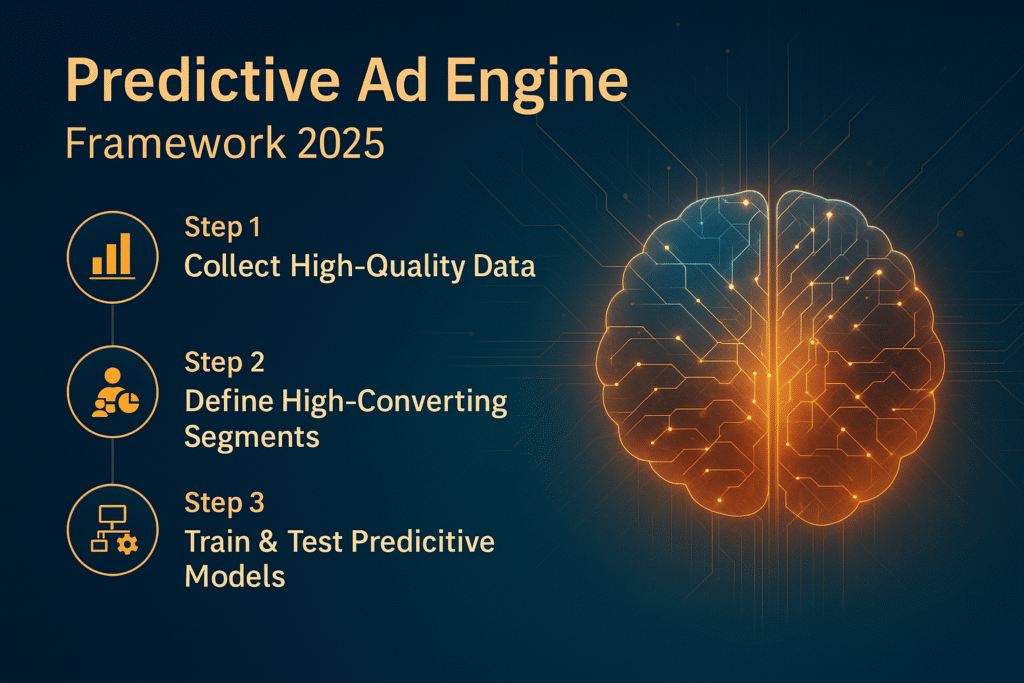
Key Steps: Building a Killer Predictive Ad Engine to Reduce CAC
Step 1: Collect High-Quality Data for Your Predictive Models
First, garbage in means garbage out. You need clean, reliable CRM, web, and product usage data before even thinking about predictive ad campaigns. Pull audience data from your signup funnel analytics, trial activity, and even churn reduction tactics you track in customer success. I recommend integrating all these data streams into a single source: think customer data platform, not scattered spreadsheets.
For a deep dive on which metrics matter, check out this SaaS metrics guide .
Step 2: Define Your Essential High-Converting Segments
Work with your data team to pinpoint segments with the highest LTV, lowest churn, and strong onboarding flows. In my experience, this means looking for clusters of users who consistently activate essential features within their first week. If you already run ongoing customer retention in SaaS, let those learnings feed your ad models. As product-led growth becomes standard, you’ll often find promising triggers hidden in early usage patterns.
Step 3: Train and Test Predictive Models for Ad Targeting
Now, plug those audience definitions into an advanced machine-learning pipeline. Test for “lookalike” targets, accounts that match your proven, high-yield buyers, while actively excluding users with high chances of churn. In 2025, even out-of-the-box predictive tools make this process accessible, not just something for data scientists. However, the key is constant iteration: run A/B splits, refresh your model inputs, and always measure changes in CAC.
Using smart predictive models usually pays off faster than expected. In one growth engagement, we identified a high-converting SaaS buyer segment with a 40% lower acquisition cost, just by learning which onboarding behaviors mapped to lifetime value. If you’re unsure how to read your own data, begin with a simple cohort chart or a snapshot of your SaaS analytics dashboard (visual suggestion: Example SaaS analytics dashboard screenshot here).
Unlocking Explosive SaaS Growth by Cutting CAC With Predictive Ads
What happens after launch? If you’re strategic, predictive ad targeting rapidly moves you from high CAC regret to efficient, scalable growth. In addition, healthy marketing budgets mean you can reinvest in saas content marketing, saas community building, and product experiments instead of plugging the cost of SaaS marketing holes. This continuous optimization acts as a safety net against the rising cost of acquisition that plagues less agile SaaS teams.
While most SaaS ads in 2025 still waste budget on outdated persona lists, the teams that win build exclusive feedback loops. For example, predictive signals from your paid campaigns should feed back into your customer success team’s daily operations. If you’re committed to churn reduction, see this churn reduction playbook .
For broader perspective, compare your CAC metrics with industry research. Detailed benchmarks from sources like SaaS Mag 2022 growth benchmarks or recent Forrester SaaS acquisition trends give context and highlight how fast predictive ads are reshaping the landscape.
Lastly, if you want to go deeper on maximizing ROI across channels, don’t miss our guide on CAC vs LTV in SaaS and newer frameworks like advanced SaaS SEO clusters and SaaS email drip campaigns to round out your stack.
FAQs
- How much should I spend on SaaS marketing in 2025?
Spending depends on your product stage, market fit, and ACV. However, most SaaS startups allocate 20-40% of revenue to marketing in the first 2 years. Always benchmark against industry reports and measure payback period weekly. - What is the best way to reduce churn in 2025?
Combine predictive modeling with personalized onboarding and proactive customer success. For more, see this retention guide . - When should a SaaS startup start investing in demand generation?
Start as soon as you have product-market fit and clear ICP data. Layer in predictive advertising to make every dollar count from day one.
Conclusion
Reducing CAC with predictive ads in 2025 isn’t just a smart move, it is now an essential survival tactic for SaaS companies that want sustainable growth. The days of spray-and-pray advertising are over. If you’re ready to take your paid acquisition campaigns to the next level, UnderBoss Media brings proven expertise in building unbeatable predictive ad strategies. Reach out today and let’s build your next winning campaign together.
READY TO REDEFINE YOUR MARKET?
BUILT SOMETHING GREAT? NOW LET’S SCALE!

Nikola Vuković is the SaaS & FinTech Analyst Writer at UnderBoss Media. He breaks down complex fintech and software trends into clear, data-driven insights that help founders, investors, and marketers stay ahead of the curve.