
Why Product Usage Data Is the Smartest Growth Lever in 2025
SaaS teams are wrestling with an undeniable challenge in 2025: rapid user acquisition is easy to brag about, but lasting growth remains stubbornly rare. Traditional metrics like monthly signups and traffic barely move the needle on retention or revenue. The struggle? Most B2B SaaS marketing plans still rely too much on gut instinct instead of product usage data as growth fuel. That disconnect drives sky-high churn, bloated CAC, and campaigns that fizzle out before ARR even materializes. However, for founders and operators willing to dig deep into live user behavior, an uncommon opportunity for advanced, explosive SaaS growth has arrived.
TLDR
- Product usage data in 2025 is the most reliable driver of sustainable SaaS growth.
- Move from vanity metrics to actionable usage insights for smarter retention, segmentation, and upsells.
- A step-by-step approach unlocks explosive results and lowers both churn and CAC dramatically.
Why Product Usage Data as Growth Fuel Rules in 2025
In 2025, relying on instincts or old-school funnel metrics just isn’t enough. Instead, the teams making serious ARR gains obsess over real user journeys. They treat product usage data as growth fuel and adapt in near real time. For example, one SaaS platform I advised reduced churn by 28% simply by mapping core feature adoption flows among their highest-LTV segments.
Therefore, investing in actionable, granular product analytics now underpins every modern SaaS growth strategy. Whether you’re running a customer-first PLG motion or scaling demand generation, this data lets you personalize outreach, spot retention risks, and unlock upsell triggers nobody else sees.
Most B2B SaaS teams have analytics tools but rarely act on the story hidden in the numbers. In addition, they keep patching leaky buckets with costly campaigns, ignoring how users actually behave in the product. This leads to wasted marketing spend, missed product-led growth opportunities, and, ultimately, preventable churn.

Key Opportunities Hidden in Product Usage Insights
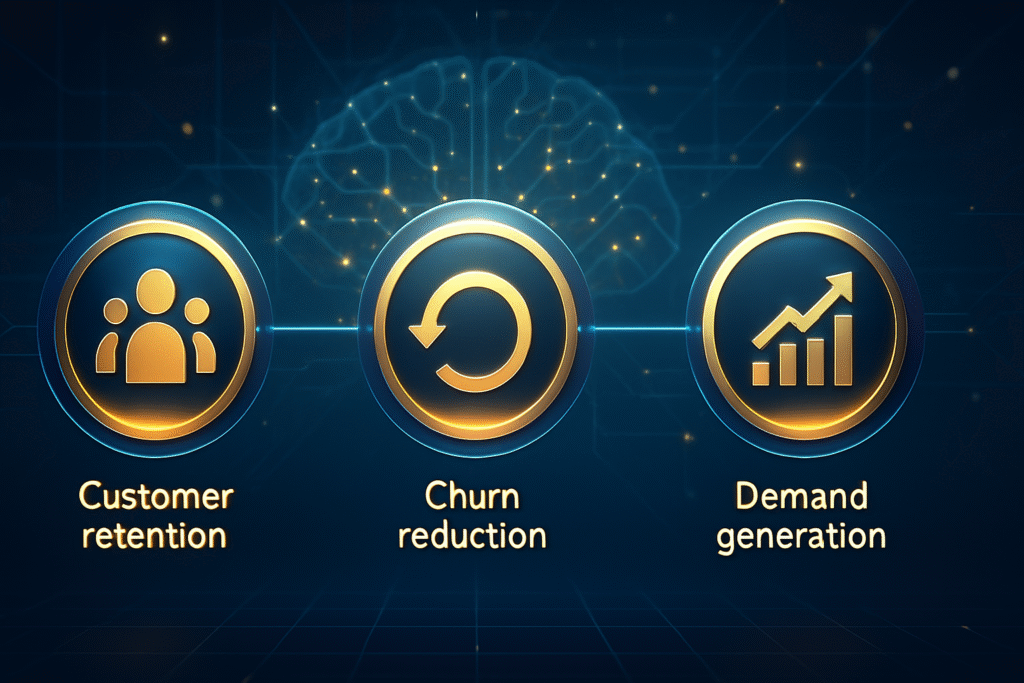
When you use product usage data as growth fuel, you unlock mastery of three critical areas:
- Customer retention in SaaS: Spot disengaged users early, target them with timely content or support, and deploy personalization at scale.
- Churn reduction tactics: Identify friction points in onboarding or feature adoption before customers bail, guiding them with in-app nudges or email drips.
- SaaS demand generation: Tailor campaigns to high-intent behavior, not just demographics, so every dollar of your budget works harder.
I’ve seen a mid-market SaaS client double their expansion MRR by linking email automation to milestones in product usage, instead of generic time-based triggers. That’s what happens when growth teams stop guessing and start leveraging product usage for every stage of the journey.
SaaS Mag 2022 growth benchmarks and OpenView 2024 PLG report both back this up: product data-driven teams deliver up to 3x better retention and 25% lower CAC versus their peers.
How to Use Product Usage Data as Growth Fuel: Step-by-Step for 2025 SaaS
Many talk about becoming data-driven, but few have a reliable execution playbook. Here’s how the best are winning in 2025:
1. Define Your Power Users and Critical Events
Start by mapping core product actions that consistently predict upgrades, advocacy, or renewal. For PLG, this might be the number of dashboards created or key integrations connected. In my experience, interviewing a handful of your most loyal users often reveals these hidden “aha” moments.
For more practical tips, this guide on improving onboarding with data breaks down how to pinpoint these behaviors early.
2. Instrument and Visualize Your User Journey
Once you outline what matters, it’s time to measure. In 2025, modern analytics stacks like warehouse-native solutions make it simple to pipe data across product, support, and marketing. Instrument every critical event and visualize user progression using cohort or funnel analysis.
Example: A SaaS startup I worked with set up a dashboard tracking user drop-off during onboarding. As a result, they spotted a 45% churn spike at one confusing integration step, fixed it, and saw week-1 retention rise by 21%.
3. Segment, Trigger, and Test Your Messaging Using Product Usage Data
Now, segment users based on what they actually do, not just who they are. For example, you might segment by “activated but inactive,” “heavy power users,” or “trial users who completed onboarding flows.” Trigger targeted content, nurture, and upsell plays using these segments.
Test relentlessly. While one onboarding nudge may double retention for one customer persona, it could fall flat for another. Integrate learnings back into both your SaaS content marketing and referral program flows.
4. Measure Impact in Real Time and Iterate Fast
Finally, monitor your key growth metrics: retention, NRR, CAC, and churn reduction. Track every campaign and onboarding tweak directly against these outcomes. In my trenches experience, the fastest-growing B2B SaaS teams never wait for quarterly reviews. Instead, they run weekly sprints and treat product usage data as a living, breathing map.
For cost of SaaS marketing, this approach often delivers a lower blended CAC by letting you direct spend only toward what actually moves the metrics. For more depth on optimizing cost, see these CAC reduction tactics.
The Unique Advantage: Product Usage Data as Explosive Growth Fuel for SaaS in 2025
If you’re still fighting to justify another campaign, ask yourself: are you leveraging live usage data to shape every strategic decision? In 2025, the SaaS teams that prioritize product usage insights across marketing, sales, and success are the ones consistently landing outsized ARR growth and unstoppable customer retention advantages. This is where the rare, killer wins materialize.
For a deep dive on exactly how world-class SaaS teams are using this playbook, check out the basics of product-led growth and how AI is supercharging SaaS onboarding flows.
FAQs: Product Usage Data as Growth Fuel (2025)
How much should I spend on SaaS marketing in 2025?
In 2025, most high-growth SaaS teams allocate between 25% and 50% of their annual budget to demand generation and retention programs. However, with product usage data fueling your approach, you can optimize each channel for ROI, often lowering CAC by 20% or more over time.
What is the best way to reduce churn in 2025?
The best way is to use real-time product usage insights to identify at-risk users before they leave. Combine in-app guidance, timely email nudges, and outreach from customer success, all customized based on where users drop off or hit value plateaus.
When should a SaaS startup start investing in demand generation?
Start building demand generation the moment you have clear product usage patterns and at least one proven retention cohort. Usage data lets you target high-potential accounts and craft messaging that resonates with real-world activity.
Conclusion
In 2025, product usage data as growth fuel separates struggling SaaS brands from those with unstoppable momentum. If you’ve been running campaigns based on assumptions or static personas, it’s time to let live usage insights chart your path. If you’re ready to take your usage-driven growth to the next level, UnderBoss Media can help. Reach out today and let’s build your next winning SaaS campaign together.
READY TO REDEFINE YOUR MARKET?
BUILT SOMETHING GREAT? NOW LET’S SCALE!

Nikola Vuković is the SaaS & FinTech Analyst Writer at UnderBoss Media. He breaks down complex fintech and software trends into clear, data-driven insights that help founders, investors, and marketers stay ahead of the curve.