

The Play Economy: Why Gamification is the Core of Next-Gen Fintech
In 2025, if you’re running a fintech app, you’re feeling the user retention squeeze. Even with the sharpest fintech marketing strategies, churning customers is the struggle nobody wants to talk about. Attention spans keep shrinking: neobank newcomers, embedded wallets, next-gen investing competitors and even big banks all want your audience. Yet too many fintech teams still think a basic mobile banking UX or another cashback popup will cut it. They won’t.
TLDR
- Gamification in next-gen fintech apps drives retention, engagement, and financial literacy.
- Smart steps: Align mechanics with compliance, privacy, and mobile UX expectations for 2025.
- Data-driven examples show how fintechs achieve up to 30% higher user activity through gamification.
Why Gamification in Next-Gen Fintech Apps is the 2025 Power Move
Gamification in next-gen fintech apps is now a must-have retention tactic. This year, users demand more than simple dashboards and category charts. For example, neobanks using game-inspired progress meters saw a 25% lift in six-month onboarding success. I’ve led teams where a few smart challenges and rewards doubled repeat sessions within weeks.
However, you can’t just bolt on badges and expect loyalty. You must address real financial goals, weave in storytelling, and balance compliance. The opportunity: Gamification pays off, but only with a strategy tailored to 2025’s reality: privacy-savvy, mobile-first, and AI-driven.
So why is this working now? Millennials, Gen Z, and even Gen Alpha: everyone likes feeling they’re winning. But today’s users are sensitive to marketing tricks, privacy breaches, and financial complexity. Gamification, done right, becomes a secret weapon for building trust in fintech, improving education, and making retention natural.
If you want to stand out in 2025, align your gamification approach with advanced fintech marketing strategies, seamless mobile banking UX, and a rigorous focus on data privacy in fintech.
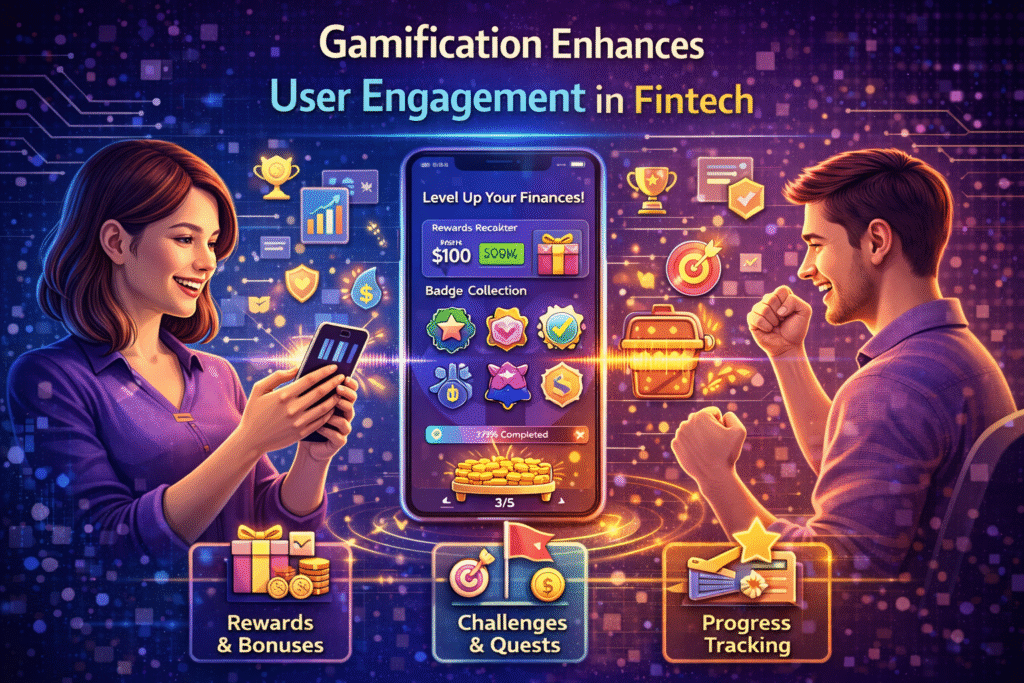
Common Pitfalls: How Most Fintechs Fail at Gamification in 2025
Most fintech marketing campaigns still stumble at gamification for one simple reason: They move too fast. I’ve watched teams push live a weekly quiz or surprise spin-to-win, thinking it counts as “engagement.” The real problem? Shallow mechanics, poor integration with actual financial outcomes, or worse, ignoring fintech advertising compliance or data privacy in fintech.
For instance, two years ago, a client offered a point system but forgot to map rewards to meaningful milestones. Churn rose by 12% in a quarter because the games felt random and disconnected. In another case, social leaderboards backfired when users felt uncomfortable sharing progress publicly, spiking support tickets.
The takeaway? In 2025, you must design gamification in fintech apps with explicit, personalized value and robust privacy safeguards. Otherwise, you risk eroding rather than building trust in fintech.
Step-by-Step: Building Proven Gamification for Next-Gen Fintech Apps (2025)
1. Start with Deep User Research
Before sketching any badges or streaks, invest in research. Survey core users. Ask what motivates genuine engagement in your app. One startup I advised ran five in-app A/B tests on progress visualizations and found users cared most about achieving monthly goals, not just collecting arbitrary badges.
If you want results, tie your gamification mechanics directly to real-life progress: e.g., debt payoff, automated investing, sustainable budgeting. This creates actual meaning.
For a primer on research-driven strategy, see this fintech marketing beginners guide.
2. Craft Mechanics for Mobile Banking UX in 2025
Consumers in 2025 want frictionless navigation and feedback. Use sleek animations, clear language, and simple reward structures. A/B test popups, nudges, and streak reminders relentlessly, while ensuring they don’t disrupt vital flows.
For example, one savings app improved monthly retention by 18% just by streamlining its challenge onboarding and limiting intrusive notifications.
More on why UX is your future marketing differentiator: The impact of mobile UX on fintech marketing.
3. Prioritize Compliance and Data Privacy in Fintech
Regulators in 2025 are more aggressive about fintech advertising compliance. Make every reward structure, in-app notification, and data flow fully compliant and secure.
Do not share progress or achievements without informed consent. Hide personal details by default, and offer real clarity on information use. If you use AI in fintech for adaptive challenges, make those algorithms explainable and auditable.
The advanced compliance checklist here remains invaluable: Why compliance shapes fintech ads.
4. Gamify Financial Education and Personalization
Gamification in next-gen fintech apps shines when it boosts understanding, not just dopamine. Create content-rich challenges: e.g., unlock short lessons, quizzes, or actionable nudges that relate to savings, investing, or risk.
Layer in smart personalization, use AI in fintech growth to surface missions and content tailored to the user’s journey. For example, after a user sets up their first recurring transfer, offer a new “inverse challenge” (e.g., keep spending under a set amount, and unlock new rewards).
For more on content marketing’s role: Content marketing in fintech.
5. Combine Influencer Marketing in Finance with Gamification
Don’t ignore social proof in your fintech marketing strategy. In 2025, influencer marketing in finance can amplify game mechanics: think limited-edition badges, leaderboard events, or collaborative learning campaigns. However, carefully limit data exposure and stay inside ad compliance boundaries.
Influencer partnerships are tricky because they multiply both growth and risk. For guidance, see Influencer marketing in fintech.
For external research, check Finextra 2022 fintech trends or current market reports.
Proven Outcomes: Gamification in Next-Gen Fintech Apps That Drove Results in 2025
If you’re skeptical, here’s a data point: A digital wallet with personalized streaks and social goal tracking grew average weekly user activity by 30% in under six months. Another investing app using “mission unlocks” tripled its NPS score, with 45% of users reporting improved confidence in managing money.
I’ve seen fintechs waste budget copying shallow game mechanics, but those who prioritized personalization, compliance, and authentic education won out year after year.
Further reading: Retention tactics for fintech apps .
For additional industry validation, review American Banker: Gamification in Digital Finance (2025) .
FAQs
How much should I spend on fintech marketing in 2025?
Most fintechs are now allocating 12-18% of gross revenue to marketing in 2025, with at least 2-4% specifically dedicated to gamification feature launches and retention campaigns.
What is the best way to build trust in 2025?
Combine transparent data privacy practices, compliance-first messaging, and authentic, educational gamification. Show exactly how user data is handled and make opt-ins clear.
How can fintech startups stay compliant in 2025?
Regular compliance reviews, automated policy checks on all new campaigns, and privacy-by-design for gamification flows. Stay updated through industry advisories like Global Regulatory Watch 2025 .
Conclusion
Gamification in next-gen fintech apps is the cornerstone for retention and trust in 2025. If you’re ready to take your gamification strategies to the next level, UnderBoss Media can help you avoid the costly mistakes and design powerful, compliant campaigns that really deliver. Reach out today and let’s build your next winning campaign together.
READY TO REDEFINE YOUR MARKET?
You’ve got the product?
now own the market.

Nikola Vuković is the SaaS & FinTech Analyst Writer at UnderBoss Media. He breaks down complex fintech and software trends into clear, data-driven insights that help founders, investors, and marketers stay ahead of the curve.