

What 90% of SaaS Startups Still Get Wrong About Growth in 2025
SaaS founders and operators are facing a high-stakes arena in 2025: acquisition costs keep rising, the market is crowded, and user expectations hit all-time highs. This year, even small missteps can derail your growth trajectory, yet many teams still fall for outdated saas marketing strategies, ignore product data, or burn budget chasing the wrong metrics. As someone who has seen countless SaaS teams struggle (and some thrive), I know the pain of wasted sprints and flatlined MRR. However, with the right changes, 2025’s SaaS growth challenge becomes an opportunity to outpace slower-moving rivals.
TLDR
- Watch out for siloed teams, math-blind spending, and over-focusing on acquisition at the expense of customer retention.
- Double down on churn reduction tactics, product-led growth, and data-driven content marketing to build real traction.
- Start measuring everything, from cost of SaaS marketing to activation rates, then calibrate fast to avoid expensive missteps.
SaaS Growth Mistakes to Avoid in 2025: The High Cost of Old Habits
Many SaaS operators still repeat tactical errors that were survivable years ago but are now deal-breakers. For instance, a SaaS startup I advised recently sunk $80,000 into paid ads without tracking CAC correctly. Their pipeline looked busy, but their churn rate jumped to 15% and net revenue retention dropped. In 2025, these hidden leaks will sink growth boats faster than ever.
However, the flip side is promising: founders who relentlessly track metrics, experiment, and cross-pollinate teams will stand out. Teams that discover and fix just two or three critical SaaS growth mistakes could drive ARR growth up by 25-40% within a year. If you can avoid these pitfalls, you gain an unfair advantage.

The Classic SaaS Growth Strategy Blunders (and How to Spot Them)
If you want to build an unbeatable B2B SaaS marketing plan in 2025, start by stress-testing these parts of your operation:
- Siloed teams: Product, marketing, and customer success don’t share critical data or insights, slowing time-to-value for end users.
- Ignoring activation and engagement: Pouring effort into top-of-funnel demand generation, but failing to fix onboarding flows, leads to wasted spend and high churn.
- Losing sight of retention: Believing new user signups equal long-term revenue, while not investing in churn reduction tactics or customer success.
For example, in Q1 of this year, I worked with a SaaS platform that trimmed onboarding steps and reduced activation churn by 25% in two months. Therefore, smart diagnostics and process overhauls can have immediate, dramatic impact.
The Opportunity: Level Up Your SaaS Growth Strategy in 2025
In 2025, AI-powered analytics, community building, and product-led growth are the dominant themes. Yet, most SaaS companies still gamble budgets on big acquisition bets, while neglecting overlooked levers like referrals, onboarding optimization, and community engagement.
When you combine proven strategies, like personalized onboarding, value-led content, and customer-centric product updates, you build sticky, scalable growth. For instance, just one tweak to a platform’s referral program brought in 18% more paying users in 90 days. What separates the fastest-growing SaaS players in 2025 is a willingness to data-test every growth move and to shift resources quickly toward what the numbers reveal as working.
Step-by-Step: Fixing Common SaaS Growth Mistakes to Avoid in 2025
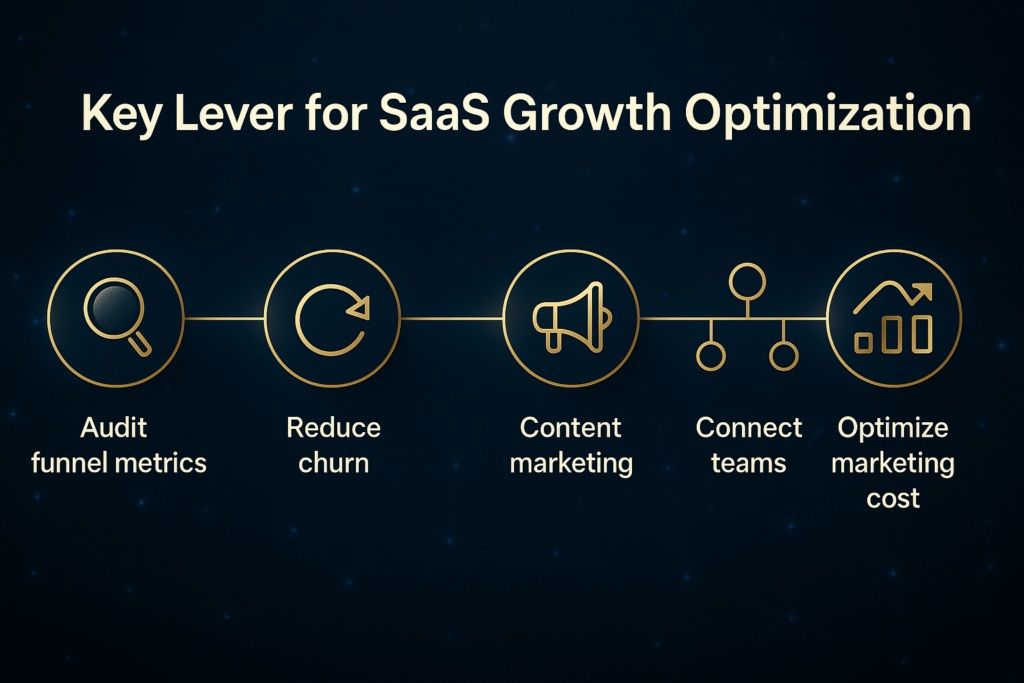
Here’s a playbook I recommend to avoid the most expensive SaaS growth mistakes in 2025:
- Audit funnel metrics monthly: Don’t just track MQLs or demo requests. Check activation rates, trial-to-paid conversions, and CAC vs. LTV to spot leaks early.
- Double down on churn reduction tactics: Use product analytics and real user feedback to fix onboarding, and test proactive customer success interventions. Even a 1-2% improvement in churn rate can enable 20% higher LTV.
- Invest in content marketing for SaaS demand generation: Build search-optimized content, but also share community stories, feature releases, and integration guides. This brings in qualified leads and builds trust.
- Drive product-led growth: Let usage data determine what features and campaigns you prioritize. Encourage self-service upgrades and build a flywheel effect.
- Connect teams with shared KPIs: Align marketing, product, and customer success to shared targets: retention, NPS, expansion revenue.
- Watch the true cost of SaaS marketing: Map all spend (even those one-off sponsorships) and weigh it against attributable revenue. Optimize, then reinvest only in proven channels.
If you want a deep dive, check out The SaaS Growth Ultimate Guide or Product-Led Growth Basics.
For wider benchmarks and market context, this SaaS Mag 2022 growth benchmarks overview remains a gold standard.
Reduce SaaS Churn and Build Scalable, Predictable Growth
Retention is the hardest SaaS growth target in 2025. Without robust churn reduction and customer success programs, acquisition spend will never pay back. In my experience, annual churn above 10% is a red flag, no matter how great your acquisition looks on paper.
Instead, rethink customer onboarding, allow more self-service, and make sure your roadmap features actually reflect user data. When you build community forums and run feedback loops, customer lifetime value climbs. See how community-led SaaS strategies can lift retention and reduce support costs by up to 30%.
If you have not performed a churn audit within the last six months, there’s almost certainly hidden revenue on the table.
For more hands-on tips, check out Retention Playbooks for SaaS and The Role of Customer Success in SaaS.
FAQs
How much should I spend on SaaS marketing in 2025?
Budgets vary based on ARR and growth stage, but in 2025, successful SaaS teams invest 25-40% of new ARR back into marketing and demand generation. Measure ROI for each channel monthly and cap spend that doesn’t influence activation, NRR, or LTV.
What is the best way to reduce churn in 2025?
Prioritize user onboarding, build feedback loops, and support customers with proactive outreach and community engagement. Use product analytics to flag at-risk users early and tailor interventions.
When should a SaaS startup start investing in demand generation?
Begin demand generation as soon as you have a working MVP and clear ideal customer profile. In 2025, early experimentation accelerates traction, provided you measure real conversion and retention, not just leads.
Conclusion
Mastering the essential SaaS growth mistakes to avoid in 2025 comes down to vigilance, fast iteration, and a willingness to challenge legacy metrics. Focus on retention, team alignment, and proven data-driven tactics to drive unstoppable ARR growth this year.
If you’re ready to take your growth strategies and results to the next level, UnderBoss Media can help. Reach out today and let’s build your next winning SaaS campaign together.
READY TO REDEFINE YOUR MARKET?
BUILT SOMETHING GREAT? NOW LET’S SCALE!

Nikola Vuković is the SaaS & FinTech Analyst Writer at UnderBoss Media. He breaks down complex fintech and software trends into clear, data-driven insights that help founders, investors, and marketers stay ahead of the curve.